

 Browse Store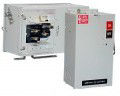
A bus plug is a removable tap-off unit that connects to a compatible busway or bus duct system and provides a protected power feed for equipment, machinery, panels, or other downstream loads.
Bus plugs are commonly used in industrial and commercial facilities because they make it easier to add, relocate, or replace power drops without rebuilding large conduit runs.
The important part is compatibility: bus plugs are not universal. The plug must match the manufacturer and series of the busway, as well as the system's voltage, amperage, wire configuration, and other physical requirements.
How a Bus Plug Works
Busway distributes electrical power through enclosed conductors running through a facility. Plug-in busway includes designated openings where compatible bus plugs can be installed.
When a bus plug is installed, its internal contacts engage the conductors inside the busway. The unit then provides a protected connection point for conductors feeding equipment below or downstream.
Depending on the system, a bus plug may use either a circuit breaker or fuses for overcurrent protection.
Breaker vs. Fusible Bus Plugs
Breaker Bus Plugs
Breaker-style bus plugs contain a circuit breaker inside the enclosure. They provide a resettable means of overcurrent protection and are common across many industrial busway systems.
When identifying a replacement, details such as the breaker type, frame size, trip rating, and interrupting rating may all matter.
Fusible Bus Plugs
Fusible bus plugs use replaceable fuses for overcurrent protection. These units are common in both current and legacy systems and may be selected based on the system design, coordination requirements, or busway family they are designed to fit.
Neither style is inherently better. The correct choice depends on the existing system and application.
Why Facilities Use Bus Plugs
The main advantage of plug-in busway is flexibility. Instead of running a dedicated conduit path every time equipment is moved or added, facilities can install compatible bus plugs at available tap-off points along the busway.
This can be especially useful for:
- Production-line changes
- Machinery moves
- Plant expansions
- New equipment installations
- Temporary or changing power requirements
- Replacement of existing tap-off units
For facilities with established busway systems, keeping compatible bus plugs available can also reduce downtime when an existing unit needs replacement.
Bus Plug Compatibility: What Actually Has to Match?
This is the part that matters most when identifying a replacement. Two bus plugs can have the same amperage and voltage ratings and still be completely incompatible.
Before sourcing a replacement, identify as much of the following information as possible.
1. Manufacturer and Busway Series
Start with the manufacturer and exact busway family. Common examples include:
- Square D I-Line and I-Line II
- Siemens Sentron
- General Electric Spectra
- Westinghouse / Cutler-Hammer Pow-R-Way
- General Electric Armor-Clad
- Siemens XL-U
The manufacturer alone usually isn't enough. A manufacturer may have produced several different busway families with completely different plug-in designs.
2. Voltage
Confirm the voltage rating of the existing busway and required bus plug. Industrial systems commonly include ratings such as 240V, 480V, and 600V, but the correct rating should always be verified from the equipment nameplate.
3. Amperage
Identify the required amp rating for the load and confirm that the bus plug configuration is appropriate for the busway system.
Bus plugs are available across a wide range of amperages, from relatively small branch circuits to large industrial loads.
4. Wire Configuration and Ground
Determine whether the system is:
- 3-wire or 4-wire
- Equipped with a neutral
- Equipped with an integral or separate ground
These details can affect both electrical compatibility and the physical configuration of the bus plug.
5. Breaker or Fusible Style
If replacing an existing unit, note whether it uses a circuit breaker or fuses.
For breaker units, record the breaker manufacturer, frame, trip rating, and any visible catalog numbers. For fusible units, note the fuse class and amp rating where available.
6. Physical Configuration
Mechanical details matter just as much as electrical ratings. Depending on the busway system, relevant details may include:
- Plug-in connection design
- Mounting orientation
- Enclosure configuration
- Cable exit direction
- Operating handle
- Interlocks
- Grounding provisions
These details are one reason photos can be extremely helpful when identifying older or obsolete equipment.
The Fastest Way to Identify a Replacement Bus Plug
If you're trying to identify an existing bus plug, start with the nameplates and photos.
Useful photos include:
- The busway nameplate
- The existing bus plug nameplate or label
- The front and sides of the bus plug
- The plug-in connection or opening
- The circuit breaker or fuse information
- Any catalog numbers or series markings
Also provide the voltage, amperage, and wire configuration if known.
For example, asking for a "100-amp Square D bus plug" may not provide enough information to identify the correct replacement. Knowing the exact Square D busway family and providing photos of the equipment can significantly narrow the search.
When Should a Bus Plug Be Inspected or Replaced?
Bus plugs operate in industrial environments where heat, dirt, vibration, age, and repeated operation can affect components over time.
Potential signs that a unit should be evaluated include:
- Discoloration or evidence of overheating
- Burnt odor
- Damaged or worn stab contacts
- Loose hardware
- Cracked or damaged enclosure components
- Corrosion or contamination
- Broken handles or interlocks
- Repeated nuisance tripping
- Visible damage around the plug-in connection
Inspection, removal, installation, and service should be performed by qualified electrical personnel following applicable safety procedures and manufacturer instructions.
Bus Plug vs. Tap Box
Bus plugs and tap boxes are both used with busway systems, but they generally serve different purposes.
A bus plug is typically installed at a plug-in opening along a busway run to provide a protected power feed to downstream equipment.
A tap box is generally used as a connection point within the busway system rather than as a removable branch tap for individual equipment.
Terminology and applications can vary by manufacturer and busway family, so the specific equipment should always be verified.
Looking for a Replacement Bus Plug?
EMSCO stocks a large inventory of new, used, and reconditioned bus plugs for current, legacy, and obsolete busway systems.
If you know the manufacturer, series, voltage, amperage, and wire configuration, start by browsing our bus plug inventory.
If you're not sure what you have, photos of the busway and bus plug nameplates can help our team identify the system and narrow down compatible options.
Browse Bus Plugs | Browse Bus Duct & Busway | Browse Tap Boxes & Accessories
Frequently Asked Questions
Are bus plugs universal?
No. Bus plugs are designed for specific busway manufacturers and series. Voltage, amperage, wire configuration, grounding, and mechanical fit must also be compatible.
Can I use a bus plug from a different manufacturer?
Bus plugs should not be assumed interchangeable across manufacturers or busway families. The plug must be designed and rated for the specific busway system.
What information do I need to replace a bus plug?
Start with the busway manufacturer and series, voltage, amperage, wire configuration, breaker or fuse information, and clear photos of the busway and bus plug nameplates.
What is another name for a bus plug?
Depending on the manufacturer and system, bus plugs may also be referred to as tap-off units or plug-in units.
Can an obsolete bus plug still be replaced?
Often, yes. Many industrial facilities continue operating legacy busway systems after the original equipment has been discontinued. Replacement may involve locating compatible used, surplus, or reconditioned equipment.