How to Source Replacement Molded Case Circuit Breakers (MCCBs)

How to Source Replacement Molded Case Circuit Breakers (MCCBs)

Need a replacement molded case circuit breaker (MCCB) for an older system? The fastest way to source the right breaker is to capture the correct nameplate details, confirm true compatibility (not just amps), and work with a supplier that has tested inventory on the shelf.

Specs to capture | How to match compatibility | Why tested/refurbished often wins | Lead times & availability | Quality, standards & warranty | FAQ

* * *

1) Capture the MCCB nameplate details (this prevents wrong orders)

Before you call, quote, or search online, document what’s on the breaker label. These details are what your supplier needs to match a correct replacement quickly. 

  • Manufacturer + model/catalog number
  • Voltage rating (system voltage must match)
  • Amp rating (and frame/series if shown)
  • Trip type / characteristics (thermal-magnetic, electronic trip unit, etc.)
  • Poles (1 [single] / 2 / 3)
  • Interrupt rating (AIC / kAIC) (critical for safety & compliance)
  • Mounting + terminals (bolt-on vs. plug-in, lugs, load-side accessories)
  • Physical dimensions (space/enclosure fit)

Fast-track tip: If anything is unclear, take a clear photo of the label (and the breaker installed in the panel) and send it to your supplier. That’s often the fastest path to the right match.
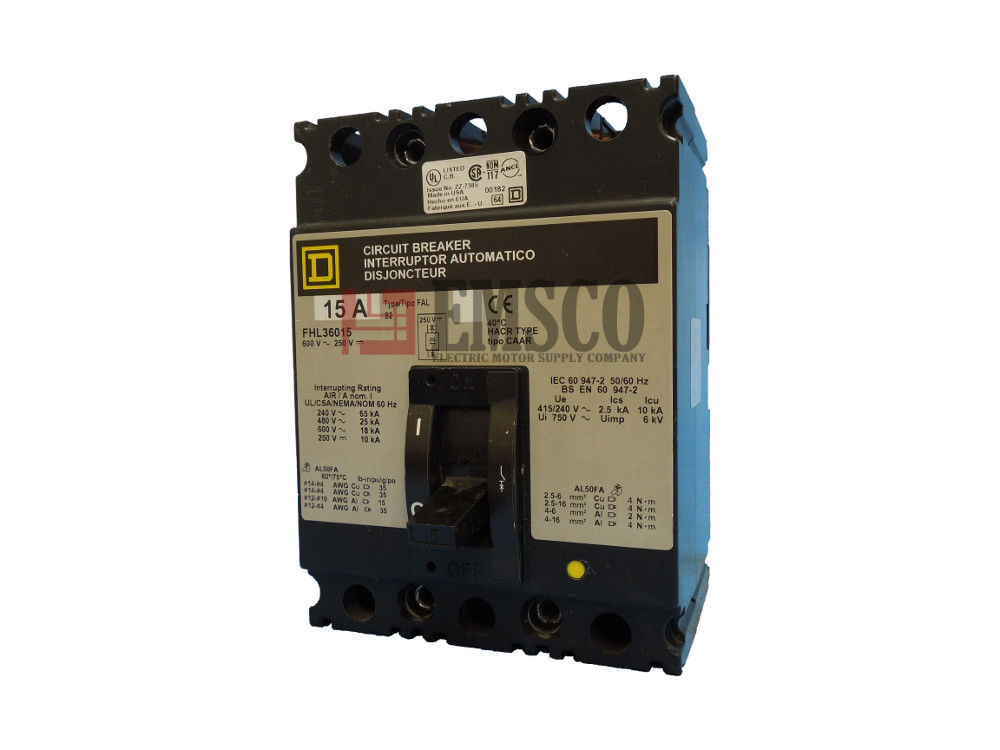
Example of an MCCB nameplate label showing amperage, voltage, and model number
Example: the breaker label is where you’ll find the model/catalog number, voltage, and amp rating.

2) Match true compatibility (not just amps)

Two breakers can share the same amp rating and still be wrong for the application. For a safe, fit-for-purpose replacement, confirm these high-impact items:

  • Voltage class and interrupt rating (AIC/kAIC)
  • Frame/series (especially on legacy gear)
  • Trip unit type and settings compatibility
  • Mounting style and terminal/lug configuration
  • Accessories (shunt trip, aux contacts, alarm switch, etc.) if your system requires them

Best practice: When in doubt, have a qualified electrician/engineer verify compatibility with your panelboard/switchboard and application requirements.

3) Consider tested/refurbished MCCBs when new is expensive or unavailable

For discontinued or hard-to-find MCCBs, used and tested inventory can be a practical solution—often faster and more cost-effective than chasing new old stock.

Why many facilities choose tested/refurbished

  • Lower total cost versus new replacements
  • Shorter lead times when the exact model is obsolete
  • Confidence when parts are inspected/tested and backed by a warranty

If you’re sourcing for critical uptime, ask your supplier what testing/inspection is performed and what documentation is available.

4) Lead time matters: prioritize “in-stock and ready” inventory

Downtime is expensive. Partnering with a supplier that maintains a large, organized breaker inventory can dramatically reduce delays.

EMSCO’s Minneapolis facility includes a 250,000-square-foot warehouse with a large selection of tested MCCBs ready to ship, helping contractors and facilities teams get replacements faster.
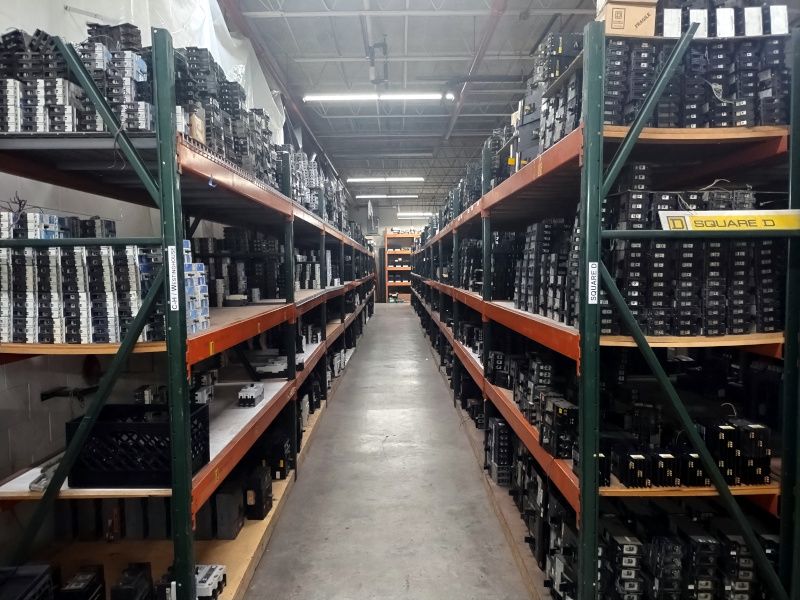
Warehouse aisle with molded case circuit breaker inventory on shelves
In-stock inventory helps shorten lead times and reduce downtime.

5) Verify quality controls, standards, and warranty

Replacement MCCBs must fit correctly and perform safely. Ask about inspection/testing practices and warranty coverage. Suppliers referencing recognized standards (such as PEARL) are signaling an emphasis on process and quality.

Quick buyer checklist:

  • What testing is performed (electrical + mechanical)?
  • Is the unit cleaned/refurbished or simply “pulled and shipped”?
  • Is a warranty included?
  • Can you provide photos and/or test documentation?
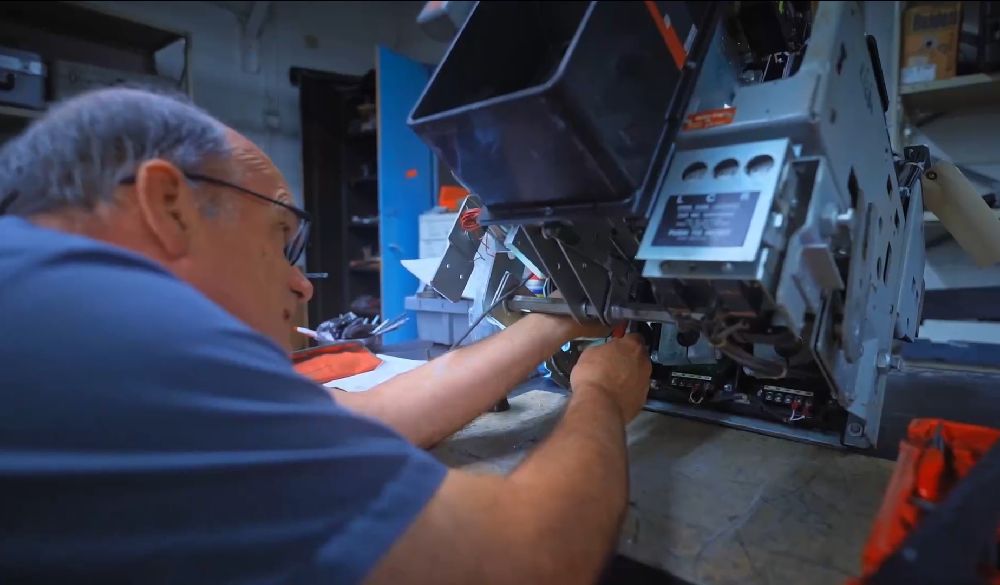
Technician inspecting and working on a circuit breaker
Ask what inspection/testing is completed before shipment.

Common mistakes to avoid

  • Ordering by amp rating only (ignoring frame/series, terminals, or mounting)
  • Skipping interrupt rating (AIC/kAIC) verification
  • Not confirming required accessories (shunt trip, aux contacts, etc.)
  • Assuming “close enough” is acceptable on legacy gear

FAQ

What info do I need to match an MCCB replacement?

At minimum: manufacturer, model/catalog number, voltage, amps, poles, trip type, interrupt rating (AIC/kAIC), and mounting/terminal configuration.

Can I replace an MCCB with a different brand or model?

Sometimes—but it must be a verified equivalent that matches the electrical ratings, mounting, and the equipment’s requirements. When in doubt, have a qualified professional confirm compatibility.

Are refurbished/used MCCBs safe?

They can be, when sourced from a reputable supplier that inspects/tests units and backs them with a warranty. Always ask what testing is performed and what documentation is available.

What if I can’t find the model number?

Send clear photos of the breaker label and how it mounts/installs. That often provides enough information for a knowledgeable supplier to identify the correct replacement or equivalent.

Next step

Browse EMSCO’s inventory of molded & insulated case circuit breakers, or contact our team with your breaker photos/specs to get a fast match.
Browse Molded Case Circuit Breakers

Everything You Need to Know About Used Bus Plugs in Industrial Power Distribution

Introduction

In today’s industrial environments, efficient and flexible power distribution is key. Bus plugs are crucial components in ensuring reliable power delivery through busway systems. Whether you're expanding your facility or maintaining an older system, choosing the right bus plugs can greatly impact your operation's safety and performance. At EMSCO, we specialize in providing used and reconditioned bus plugs, offering solutions from trusted brands like GE, Square D, and Cutler-Hammer, ensuring cost-effective and reliable options for all industrial power needs.

What Are Bus Plugs and Why Are They Important?


Bus plugs connect electrical equipment to busway systems, distributing power efficiently across facilities. Bus plugs offer flexibility in power distribution, allowing for easy reconfiguration as industrial layouts change. In addition to their adaptability, they provide essential circuit protection, ensuring equipment is safeguarded against overcurrent and electrical faults.

EMSCO is proud to offer reconditioned bus plugs that meet or exceed industry standards, giving you access to reliable equipment from trusted manufacturers at a fraction of the cost of new components.

Benefits of Choosing Used and Reconditioned Bus Plugs


Opting for used or refurbished bus plugs offers numerous benefits, especially for businesses looking to optimize costs without sacrificing quality:

  1. Cost Savings: Purchasing used bus plugs can save up to 50% compared to new products. With reconditioned options from brands like Square D and Siemens, you get the same quality at a reduced price.
  2. Access to Obsolete Parts: If you're working with an older busway system, finding parts that are no longer manufactured can be a challenge. We offer a wide selection of obsolete bus plugs, including those from legacy brands like Westinghouse and ITE.
  3. Faster Lead Times: At EMSCO, we maintain a large inventory of reconditioned bus plugs, which allows us to deliver products faster than competitors who rely on factory orders for new parts.
  4. Environmental Sustainability: Reusing and refurbishing electrical equipment reduces waste, supporting your company’s sustainability goals while keeping your operations running smoothly.

Types of Bus Plugs Available


At EMSCO, we stock a wide range of bus plugs to meet various industrial needs, including:

  • Fusible Bus Plugs: These provide built-in circuit protection using fuses that disconnect the power in the event of an overcurrent, helping prevent equipment damage.
  • Non-Fusible Bus Plugs: These use circuit breakers instead of fuses, allowing for quick resetting in case of a fault, reducing downtime for your operations.

We offer configurations for both high- and low-voltage systems, including 3-phase bus plugs, 10-amp bus plugs to 1600-amp bus plugs in three and four wire configurations.

Why Choose EMSCO for Your Reconditioned Bus Plugs?


With over 70 years of experience in the electrical distribution industry, EMSCO is a trusted provider of used and reconditioned electrical equipment. We offer:

  • The largest inventory of used bus plugs in the country, ensuring that you get the equipment you need quickly.
  • Expertise in refurbishing electrical components to meet PEARL standards, ensuring the reliability and safety of all our products.
  • A one-year warranty on all reconditioned bus plugs.
  • Competitive pricing on reconditioned equipment from top brands, such as GE, Square D, and Eaton, helping you reduce costs without compromising on quality.
  • Dedicated customer support to assist in selecting the right bus plug for your specific needs.

Key Considerations for Selecting Bus Plugs


When choosing the appropriate used bus plug for your system, there are several important factors to keep in mind:

  • Current and Voltage Ratings: Ensure that the bus plug you choose is compatible with your busway system and the equipment it powers. Our team at EMSCO can help guide you through this process.
  • Installation Requirements: Depending on your facility's layout, you may need horizontal or vertical configurations. We offer both, along with expert advice to ensure a smooth installation.
  • Compatibility with Legacy Systems: If your facility uses an older busway system, finding obsolete bus plugs can be difficult. We carry a wide range of hard-to-find parts from manufacturers like Cutler-Hammer / Westinghouse to keep your system running smoothly.

Conclusion


Bus plugs are integral to maintaining efficient, reliable, and safe power distribution in industrial settings. Whether you're looking to expand your existing system, replace outdated equipment, or find cost-effective solutions, EMSCO is here to help. With our vast inventory of refurbished bus plugs from trusted brands like GE and Square D, we ensure your facility operates at peak performance without breaking the bank.

For more information or to explore our selection of reconditioned bus plugs, visit our Bus Plugs Category Page today. Let us help you find the right solution to keep your power distribution system running smoothly and efficiently.

Maximize Efficiency and Savings with Bulldog Busway and Bus Plugs: New, Reconditioned, and Safety-Tested Solutions

Upgrading or replacing your existing busway and bus plugs with Bulldog Busway and Bus Plugs—whether new, reconditioned, or used — brings benefits to your facility.

Reconditioned used or inspected and safety-tested Bulldog bus plugs can significantly lower your investment compared to purchasing new ones. These options provide the reliability and efficiency of new equipment at a fraction of the cost, allowing you to allocate budget to other critical areas of your operations.

Bus Plug Testing and Quality Assurance:

EMSCO Reconditioned used and inspected, safety-tested bus plugs undergo testing processes to meet industry standards and your specific operational requirements. This means you can trust that these components will perform reliably, maintaining the safety and integrity of your electrical system.

Bulldog Bus Plugs In Stock for Reduced Lead Times:

Used and reconditioned Bulldog Busway and Bus Plugs are often more readily available than new ones, which can have long lead times due to manufacturing processes and supply chain delays. This means you can upgrade your busway system faster, minimizing disruptions and keep your business moving.

Buyers Checklist Questions for ITE/Siemens Bulldog Bus Plugs

☑️ Amperage

Knowing the available amperage for bus plug options ensures you choose a bus plug that can handle your specific electrical load, preventing overloading and ensuring efficient operation. Selecting the correct amperage rating matching the bus plug's capacity to your system's leads to safety and optimal performance.

☑️ Ground

Review the grounding options provided by ITE Bulldog Bus Plugs. Proper grounding options are essential for electrical safety and system stability, preventing potential hazards and ensuring compliance with safety standards.

☑️ Fusible or Breaker Style Bus Plugs

Choose between fusible and breaker style: Fusible Bus Plugs are ideal for applications where cost is a primary concern, and where high fault current handling capability is needed. Breaker Style Bus Plugs are better suited for applications where minimizing downtime is critical, and where power options are important.

☑️ Voltage

Correct voltage ratings to ensure that the bus plug can handle the electrical potential of your system, preventing mismatches that could lead to equipment failure or safety issues.

☑️ Bus Plug Wiring

Wire compatibility ensures that the bus plug can be securely and effectively connected to your existing wiring, which is critical for maintaining system integrity and performance. This also reduces the risk of faults and improves overall system performance.

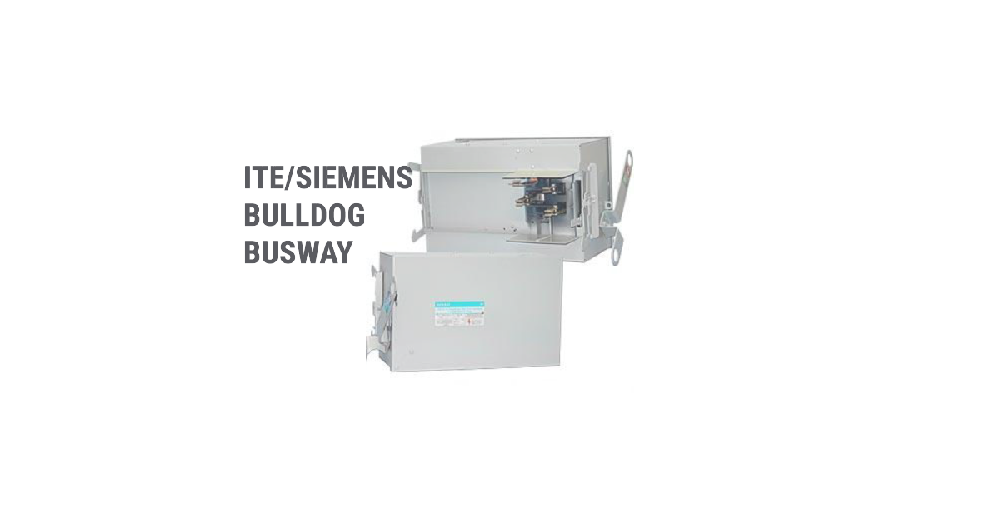
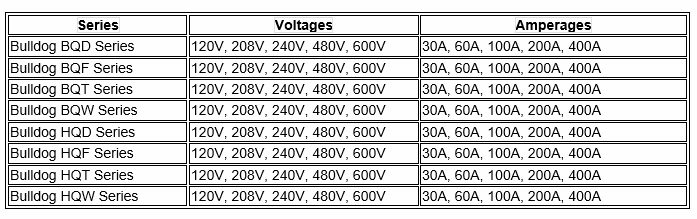
ITE/SIEMENS Bulldog Series Busway Voltage and Amperage

5 Questions to Ask When Choosing Bus Plug Replacements

1. What factors should I consider when selecting the amperage rating for my bus plugs?

Answer:

When deciding on an amperage rating for your bus plugs, keep in mind your system's electrical load requirements, the maximum current the bus plug can carry, and the possibility of future extension. Using the proper amperage rating reduces overloading, improves safety, and extends the life of your electrical components.

2. Should I choose fusible or breaker style bus plugs for my system?

Answer:

Your special needs will determine whether you use fusible or breaker style bus plugs. Fusible bus plugs are inexpensive and can take greater fault currents, but they require fuse replacement after usage. Breaker style bus plugs are resettable and have customizable trip settings, which reduces downtime and increases operating flexibility; still, they are often more expensive upfront.

3. How important is proper grounding for bus plugs, and what options are available?

Answer:

Correct grounding is necessary for electrical safety and system performance. It protects against electrical faults and surges, lowering the risk of equipment damage and providing compliance to safety regulations. To maintain a safe and stable electrical environment, be sure that the bus plugs you purchase have sufficient grounding options that meet the requirements of your system.

4. What voltage ratings should I consider when selecting bus plugs for my electrical system?

Answer:

Check your electrical system's voltage needs for safe compatibility with bus plugs. To guarantee safe and efficient operation, the bus plug's voltage rating must be equal to or greater than the system operating voltage. Common voltage ratings include 120V, 208V, 240V, 480V, and 600V. To avoid malfunctions or safety issues, check whether the bus plugs you choose are capable of handling the voltage in your system.

5. Are there benefits to using reconditioned or inspected and safety-tested bus plugs compared to new ones?

Answer:

These options can provide significant cost savings while still offering reliability and performance equivalent to new components. Reconditioned bus plugs undergo thorough testing to make certain they meet industry standards, making them a practical and economical choice for maintaining and upgrading your electrical system.

Request help online or call a product specialist at 800-328-1842.

Reconditioned, used busway and bus plugs that are inspected and safety tested offer a viable option for your electrical needs. These products go through our evaluation and testing processes to certify they meet safety standards for safety and performance.

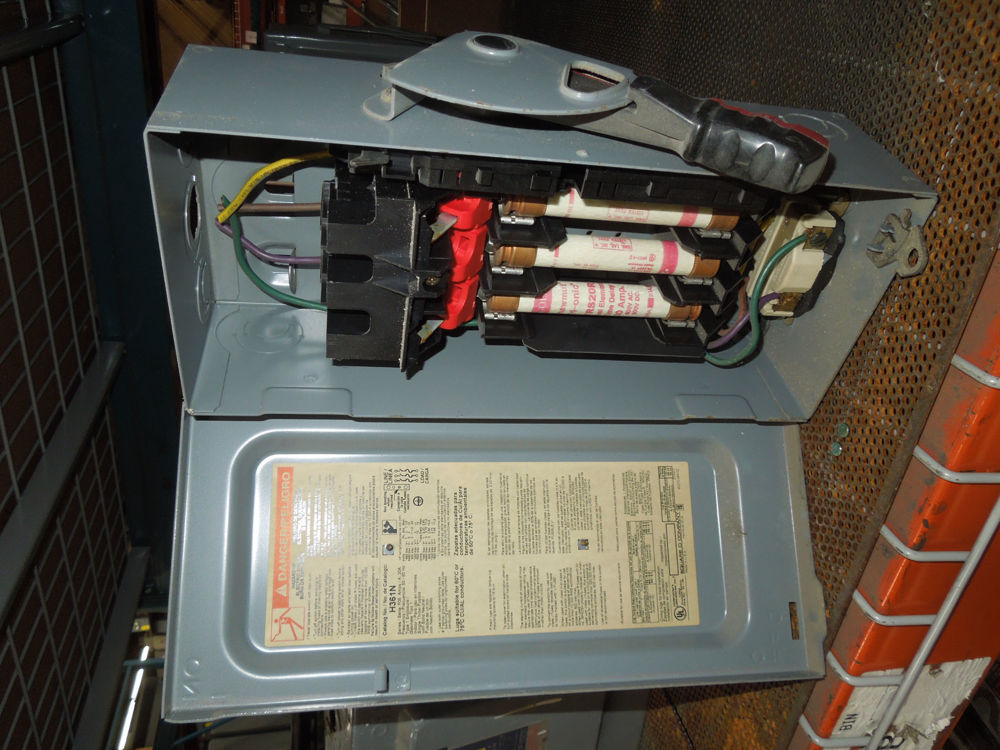
Exploring the Basics of Safety Switches and Disconnects: Ensuring Electrical Safety in Your Facility

In any industrial or commercial setting, ensuring the safety of personnel and equipment is paramount. One critical aspect of electrical safety is the proper implementation of safety switches and disconnects. These devices play a crucial role in protecting against electrical hazards, preventing accidents, and facilitating maintenance work on electrical systems and machinery. In this blog post, we'll delve into the basics of safety switches and disconnects, exploring their functions, types, and importance in maintaining a safe working environment.


Understanding Safety Switches and Disconnects

Safety switches, also known as disconnect switches or isolators, are devices designed to quickly and safely disconnect electrical power to a circuit or piece of equipment. They serve as a means of isolating electrical circuits, machinery, or appliances to prevent electric shock, fire, or damage to equipment during maintenance, repair, or emergency situations.

Functions of Safety Switches and Disconnects

Isolation: Safety switches provide a physical break in the electrical circuit, ensuring that no power is supplied to the connected equipment or circuit when in the off position. This isolation is essential for preventing accidental contact with live electrical components.

Emergency Shutdown: In case of electrical faults or emergencies, safety switches offer a quick and reliable means of shutting off power to affected circuits or equipment, minimizing the risk of further damage or injury.

Lockout/Tagout (LOTO): Safety switches are often used in conjunction with lockout/tagout procedures to ensure that equipment remains de-energized during maintenance or servicing, preventing unauthorized activation and safeguarding personnel working on the equipment.


Types of Safety Switches and Disconnects

Fused Disconnect Switches: These devices incorporate fuses into the disconnect switch mechanism, providing overcurrent protection when excessive current flows along with the ability to disconnect power, preventing damage to equipment and minimizing safety risks.

Non-Fused Disconnect Switches: Non-fused disconnect switches offer a means of isolating power without the inclusion of fuses. They are commonly used in applications where overcurrent protection is provided elsewhere in the circuit.

Circuit Breaker Disconnects: Circuit breaker disconnects combine the functions of a disconnect switch and a circuit breaker, allowing for both disconnection and overcurrent protection.


Importance of Safety Switches and Disconnects

Electrical Safety: By providing a means of isolating power, safety switches and disconnects help prevent electric shock and electrocution hazards, safeguarding personnel working on electrical systems.

Equipment Protection: Disconnecting power during maintenance or repair activities helps prevent damage to equipment and extends its operational lifespan.

Fire Prevention: Properly functioning safety switches can mitigate the risk of electrical fires by quickly disconnecting power in the event of a fault or overload.

Compliance with Regulations: Many regulatory standards and codes mandate the use of safety switches and disconnects in industrial and commercial settings to ensure compliance with safety requirements and prevent accidents


Key Considerations When Choosing Safety Switches

Voltage and Amperage Rating: Select safety switches that match the voltage and amperage requirements of the electrical system they will be protecting.

Enclosure Type: Consider the environmental conditions (e.g., indoor, outdoor, hazardous locations) when choosing the appropriate enclosure type for the safety switch and select the appropriate NEMA rating for the disconnect switch.

Fused or Non-Fused: Ensure that you select the correct type for the applications of your electrical system.


Conclusion

Safety switches and disconnects are indispensable components in electrical systems, serving to protect both personnel and equipment from electrical hazards. Understanding their purpose, types, and key considerations is essential for ensuring a safe and compliant electrical environment. By prioritizing safety and selecting the right safety switches for your application, you can mitigate risks and create a secure work environment. Remember, when it comes to electrical safety, there's no room for compromise.


Shop the largest selection of used and reconditioned safety switches

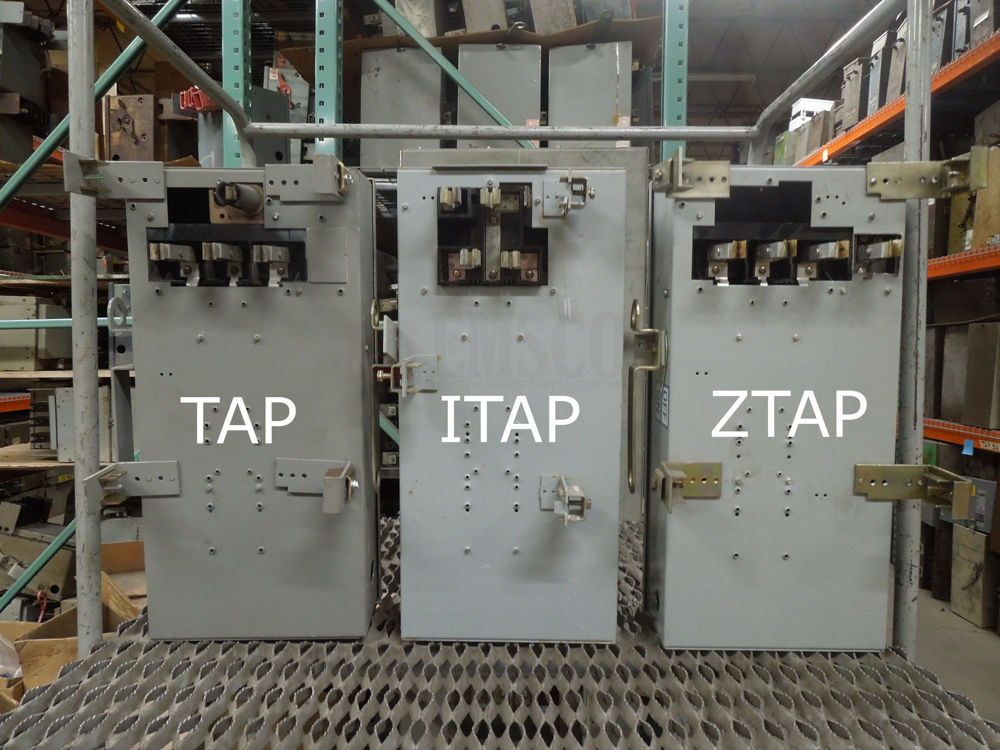
Identifying Westinghouse TAP-ITAP-ZTAP Bus Plugs


westinghouse TAP, ITAP, and ZTAP bus plugs

One of the most common challenges in our industry is accurately distinguishing between the different series of vintage Westinghouse/Cutler-Hammer busway systems. Despite their nearly identical appearances, the TAP, ITAP, and ZTAP series are entirely distinct and cannot be interchanged.

Fortunately, there are quick and straightforward methods for correctly identifying the specific vintage series you require. In the following discussion, we will explore these differences, highlighting easy-to-spot clues on the plugs to help you correctly identify the type you need.

 
Identifying the types:

TAP

3 wire / 4 wire
For use with Westinghouse Standard-Design Busway 225A thru 1000A


Stab configuration: Aligned in a row; neutral offset from stabs.

TAP bus plugs feature stabs that align with each other. In the example above, this three-wire version features 3 stabs vertically aligned with one another. Note that the neutral stab will be offset from the stabs. The part number prefix on the front label will begin with TAP. Any deviations from that prefix designate that it is NOT a TAP series bus plug. It should also be mentioned that the prefix TAP is also used on ZTAP plugs, so another giveaway to differentiate a TAP series bus plug is by hanger width. The hanger width on the TAP series measures 9 ⅝ inches. If the hangers measure 11 ⅝ inches, it is a ZTAP bus plug. More on that below.


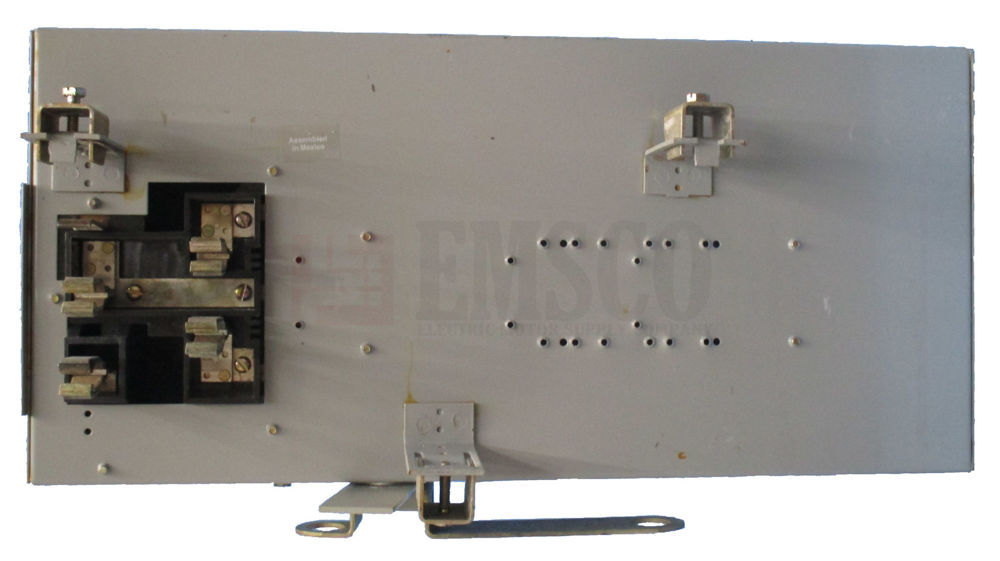
ITAP

3 wire / 4 wire

For use in Westinghouse Pow-R-Way I & II Busway 225A thru 4000A


Stab configuration: Staggered/Offset

The quickest and easiest way to identify an ITAP bus plug is by noting the stab configuration. In ITAP plugs, the stabs are offset from one another. In the 4-wire example above, you can see staggered stabs. The product label on the front will feature a part number that begins with the prefix ITAP. Any deviation from this designates that the plug is NOT part of the ITAP series.


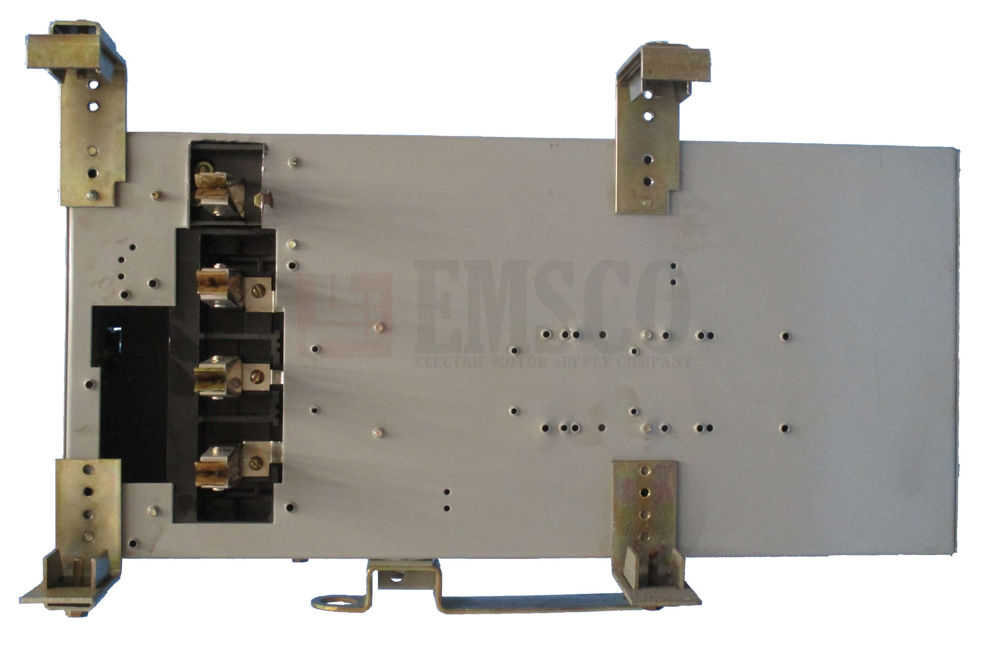
ZTAP

3 wire / 4 wire
For use with Westinghouse Low-Impedance Busway 1000A thru 4000A

Stab configuration: Aligned in a row; neutral stab aligned with stabs.

Extremely similar in appearance to TAP plugs, there are fortunately two tell-tale signs to identify a ZTAP bus plug: the neutral stab position (fourth wire) and hanger bracket width. With ZTAP plugs, the stabs are again aligned with one another, however, it’s critical to note that the neutral stab will also be aligned with the stabs. The example above shows that this is a three-wire plug with a neutral stab at the top.

The other big giveaway that this is a ZTAP plug is the hanger width. As you can see in the example, the hangers extend beyond the width of the plug on both the top and bottom. In the ZTAP series, the hanger dimensions measure 11 ⅝ inches wide versus the TAP series hanger width of 9 ⅝ inches.

It is also critical to note that you cannot go by the product label to identify a ZTAP bus plug. The prefix on the label, confusingly, will also begin with TAP. It is only by the neutral stab position and hanger width that you can correctly identify a ZTAP bus plug from a TAP bus plug.


We're here to help

We hope that this quick guide helps provide a quick overview of the various Westinghouse bus plug types. If you still have any questions regarding the type that you need, please email us or give us a call and our sales team will be happy to assist you.


Shop Westinghouse Bus Plugs

Fuses vs. Circuit Breakers: Understanding the Key Differences in Industrial Power Distribution

In any industrial power distribution system, safety and reliability are of paramount importance. To protect electrical circuits and equipment from potential hazards such as overcurrents and short circuits, engineers and electricians often employ protective devices like fuses and circuit breakers. These devices play a crucial role in safeguarding the entire system, but they differ in design, operation, and response to electrical faults. In this blog post, we will explore the key differences between fuses and circuit breakers in industrial power distribution.

  1. Function and Operation:

    • Fuses: A fuse is a one-time, non-resettable protective device that contains a metal strip or wire designed to melt when exposed to excessive current flow. When the current exceeds the fuse's rated value, the metal inside the fuse will melt, opening the circuit and stopping the current flow. Fuses are inexpensive and simple in design, making them suitable for basic protection.
    • Circuit Breakers: Circuit breakers, on the other hand, are resettable protective devices designed to interrupt the current flow upon detecting an overcurrent or short circuit. They consist of an electromechanical switch that opens the circuit when an abnormal condition occurs. After tripping, circuit breakers can be manually or automatically reset, restoring power to the circuit once the fault is resolved.
  2. Response Time:

    • Fuses: Fuses generally have a faster response time compared to circuit breakers. When subjected to overcurrent conditions, fuses blow quickly, thereby interrupting the current flow almost instantaneously. This swift response is essential in protecting sensitive equipment from damage due to high currents.
    • Circuit Breakers: Circuit breakers may have a slightly slower response time compared to fuses. The tripping mechanism needs a brief moment to detect the fault and open the circuit. While the delay is minimal, it can be a critical factor when dealing with highly sensitive electronic devices.
  3. Protection Accuracy:

    • Fuses: Fuses provide good protection against overcurrent conditions, but their accuracy depends on the type and rating of the fuse. They might not always respond precisely to minor overloads or fluctuating currents, which can lead to undesired nuisance trips or insufficient protection in some cases.
    • Circuit Breakers: Circuit breakers offer more precise protection since they can be equipped with various types of trip units that allow customization of the tripping characteristics. This adaptability ensures that circuit breakers respond accurately to specific overcurrent levels, providing better protection for critical equipment.
  4. Maintenance and Resetting:

    • Fuses: Once a fuse blows due to a fault, it must be replaced manually. This process can be time-consuming, especially in large industrial setups with numerous fuses. Additionally, identifying the faulty fuse might require careful inspection, further adding to the downtime.
    • Circuit Breakers: Circuit breakers have the advantage of being resettable, which significantly reduces downtime in the event of a fault. After isolating the faulty circuit, the breaker can be reset with a simple switch, restoring power to the system almost immediately.
  5. Cost and Longevity:

    • Fuses: Fuses are generally more cost-effective than circuit breakers, making them a popular choice for lower current applications. However, their one-time use means they must be replaced after each fault, resulting in higher long-term maintenance costs.
    • Circuit Breakers: While circuit breakers may have a higher initial cost, their reusability and longer lifespan offset this drawback. They are an economically viable option for higher current applications and provide better value in the long run.

In conclusion, both fuses and circuit breakers play critical roles in safeguarding industrial power distribution systems. Fuses offer fast response times and cost-effectiveness, while circuit breakers provide more precise protection and are easier to maintain. The choice between these protective devices ultimately depends on the specific requirements of the industrial application and the level of protection needed for the equipment and personnel involved.

A Brief Introduction to Motor Control Centers

It's been a while since we discussed one of our main product categories in an overview post. In the past, we've covered topics like bus plugs to provide general information about the products EMSCO offers. In this post, we'll delve into the basics of Motor Control Centers (MCC).

Basics of Motor Control Centers (MCCs)

At its core, a Motor Control Center consists of a series of buckets housed within a larger structure. In industrial and manufacturing environments using electric motors, a system is necessary to control these motors, and that's where the motor control center plays a crucial role.

How They Operate

Feeder buckets are responsible for powering and controlling the electric motors, typically with one bucket per motor. Given that industrial processes often involve numerous electric motors, multiple buckets are required to manage the entire system. The structure serves as the vertical housing, conveniently holding and controlling all feeder buckets in a central location.

The buckets within the structure come in various sizes and configurations, such as fused or circuit breakers. Additionally, these buckets are fully removable, providing flexibility for the electric system to adapt to changes in industrial processes. For instance, adding or removing motors is simplified by adding or removing buckets from the structure or swapping them out for the appropriate components.

In Need of Parts?

If you're looking to replace, upgrade, or install a new MCC system, your search ends here. We offer a wide range of vertical sections of motor control centers, ranging from 400 amperes to 3000 amperes, with main or main lug compartments. Our extensive stock includes all major brands like Square D, GE, Allen Bradley, and more. With a plethora of buckets in stock, both fusible and breaker styles, in sizes 0-6, single and twin feeder buckets, EMSCO is certain to have the components you require.

About EMSCO

Established in 1948, Electric Motor Supply Company (EMSCO) is a leading dealer of used and refurbished industrial electrical systems and components. Our vast inventory, housed in our 250,000 square foot warehouse in Minneapolis, MN, ensures we have the exact part you need. From over 25 miles of bus duct, thousands of bus plugs, to various transformers, circuit breakers, and beyond, our experts are ready to assist with all your electrical requirements.

 
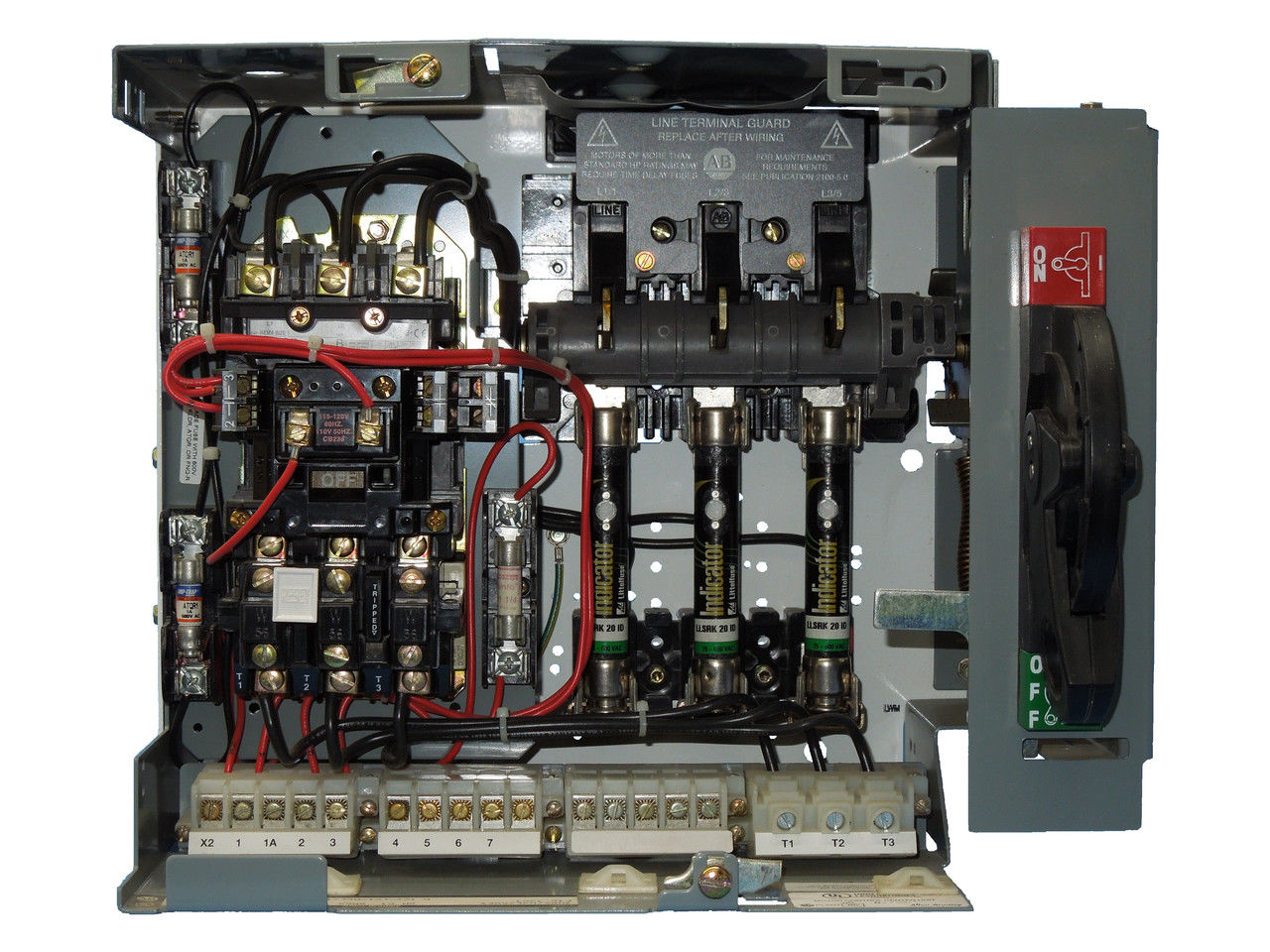
Picture of Allen Bradley 2100 Series FVNR Size-1 Starter Fusible Disconnect MCC Bucket R&G

Shop MCC Buckets and Structure

An Introduction to Bus Plugs

What Is a Bus Plug? A Practical Guide to Busway Tap-Off Power

Breaker-style bus plug (tap-off unit) used with busway/bus duct
Example of a breaker-style bus plug (tap-off unit).

In large industrial facilities, running new conduit and hardwiring every time equipment moves can be slow, costly, and disruptive. That’s why many plants use bus duct (busway) with bus plugs—a faster, more flexible way to distribute power across open floor plans.

A bus plug (also called a tap-off unit or plug-in unit) locks into a busway run to safely “tap” power and feed equipment below. Because bus plugs are designed for quick installation and removal, they’re a smart solution for equipment moves, line changes, and facility expansions.


Quick definition: A bus plug (often called a tap-off unit or plug-in unit) is a device that locks into a busway run and safely “taps” power to feed equipment below. Bus plugs are commonly available in breaker or fusible styles and must match the manufacturer + series of the busway they connect to.

Table of Contents


Busway (Bus Duct) Basics

In most homes and many commercial buildings, power is distributed by wiring inside walls and ceilings. Industrial facilities are different: wide-open spaces, changing production lines, and ongoing expansions make traditional hardwiring less practical.

Busway (also called bus duct) is a metal enclosure that contains conductors for distributing electricity. It’s installed overhead or underfloor in connected sections to create a run that fits your layout. The run includes plug-in points where bus plugs can connect to deliver power where it’s needed.

What a Bus Plug Does

A bus plug attaches to a busway run and provides a protected point to feed a machine, process, or downstream panel. Inside the unit, contacts engage the busway conductors, and the bus plug routes that power out through lugs/cable connections—typically with built-in protection.

Most bus plugs are designed for fast installation and removal, making them ideal when equipment moves, lines change, or new loads are added.

Common Bus Plug Types

1) Breaker bus plugs

Breaker-style bus plugs include a circuit breaker inside the enclosure. This makes resets and servicing straightforward, and they’re common in many industrial layouts.

2) Fusible bus plugs

Fusible bus plugs use fuses for overcurrent protection. Facilities often choose fuses for specific protection strategies, coordination needs, or legacy systems.

Other fitment details that matter

  • Voltage (example ranges you’ll commonly see include 120/240V, 240V, 480V, and 600V)
  • Amperage (low-amp through high-amp options, depending on busway series and application)
  • Wire configuration (3-wire vs. 4-wire) and whether a ground is included
  • Enclosure/orientation (how the unit mounts and where the cable exits)
  • Manufacturer + series compatibility (bus plugs are not universal)

Why Facilities Use Bus Plugs

  • Faster changes: Add or move drops without reworking large conduit runs.
  • Scalable expansions: Ideal for plant additions, new lines, equipment overhauls, or reconfigurations.
  • Cleaner installs: Power distribution can look more organized in open areas.
  • Serviceability: Well-matched plug-in units make it easier to isolate and maintain loads.

How to Select the Right Bus Plug (Fitment Checklist)

If you want a quote or need help identifying a replacement, here’s what we recommend gathering first:

  1. Busway manufacturer + series (example series can include I-Line, Sentron, Spectra, Pow-R-Way, Armor-Clad, XL-U, and more)
  2. Busway rating details: voltage class, amperage, and wire configuration (3-wire/4-wire, neutral, ground)
  3. Bus plug style: breaker vs. fusible
  4. Amp rating needed for the load (and any coordination requirements)
  5. Physical details: mounting position, cable exit direction, and enclosure requirements
  6. Photos of the nameplates (busway label + bus plug label) and the plug-in opening if possible

Tip: The fastest way to get the right match is to send us clear photos of the busway and any existing plug/unit labels. If you’re unsure, our team can help identify what you have and what will fit.

When to Service or Replace a Bus Plug

Bus plugs operate in demanding environments. Consider inspection or replacement if you notice:

  • Signs of overheating (discoloration, odor, brittle insulation)
  • Loose hardware or damaged stab contacts
  • Cracked housings, broken handles, or missing interlock components
  • Corrosion or contamination that could affect connections
  • Nuisance trips or inconsistent performance

Always follow facility safety procedures and use qualified electrical professionals for installation and service.


Bus Plugs & Busway at EMSCO

If you’re sourcing a replacement bus plug—or trying to match a legacy/obsolete system—EMSCO stocks a large selection of new, used, and reconditioned bus plugs across major manufacturers and many vintages.

Need help fast? Call our team at 1-800-328-1842 (24-hour emergency line).

FAQ

Are bus plugs universal?

No. Bus plugs must match the manufacturer and series of the busway they’re designed for, along with the correct electrical ratings.

What’s the difference between a bus plug and a tap box?

A bus plug is typically a plug-in tap-off unit used along a busway run to feed equipment. A tap box is commonly used as an end/center feed or connection point in a busway system. Both must match the busway series and application.

Breaker vs. fusible bus plug: which is better?

It depends on your system design, coordination strategy, and what the busway supports. Breaker units are convenient to reset and service; fusible units are often chosen for specific protection requirements or legacy setups.

What does 3-wire vs. 4-wire mean?

In many systems, 3-wire refers to three-phase conductors (no neutral), while 4-wire includes a neutral. Always verify your busway labeling and facility requirements.

What information should I send for a quick match?

Photos of the busway nameplate, the plug/unit label (if available), and the plug-in opening—plus your voltage, amp, and wire/ground requirements—usually gets you to the right match fastest.

Browse our selection of bus plugs

Updated 2026