
How to Source Replacement Molded Case Circuit Breakers (MCCBs)

Need a replacement molded case circuit breaker (MCCB) for an older system? The fastest way to source the right breaker is to capture the correct nameplate details, confirm true compatibility (not just amps), and work with a supplier that has tested inventory on the shelf.

Specs to capture | How to match compatibility | Why tested/refurbished often wins | Lead times & availability | Quality, standards & warranty | FAQ


1) Capture the MCCB nameplate details (this prevents wrong orders)

Before you call, quote, or search online, document what’s on the breaker label. These details are what your supplier needs to match a correct replacement quickly. :contentReference[oaicite:1]{index=1}

  • Manufacturer + model/catalog number
  • Voltage rating (system voltage must match)
  • Amp rating (and frame/series if shown)
  • Trip type / characteristics (thermal-magnetic, electronic trip unit, etc.)
  • Poles (1 [single] / 2 / 3)
  • Interrupt rating (AIC / kAIC) (critical for safety & compliance)
  • Mounting + terminals (bolt-on vs. plug-in, lugs, load-side accessories)
  • Physical dimensions (space/enclosure fit)
Fast-track tip: If anything is unclear, take a clear photo of the label (and the breaker installed in the panel) and send it to your supplier. That’s often the fastest path to the right match. 
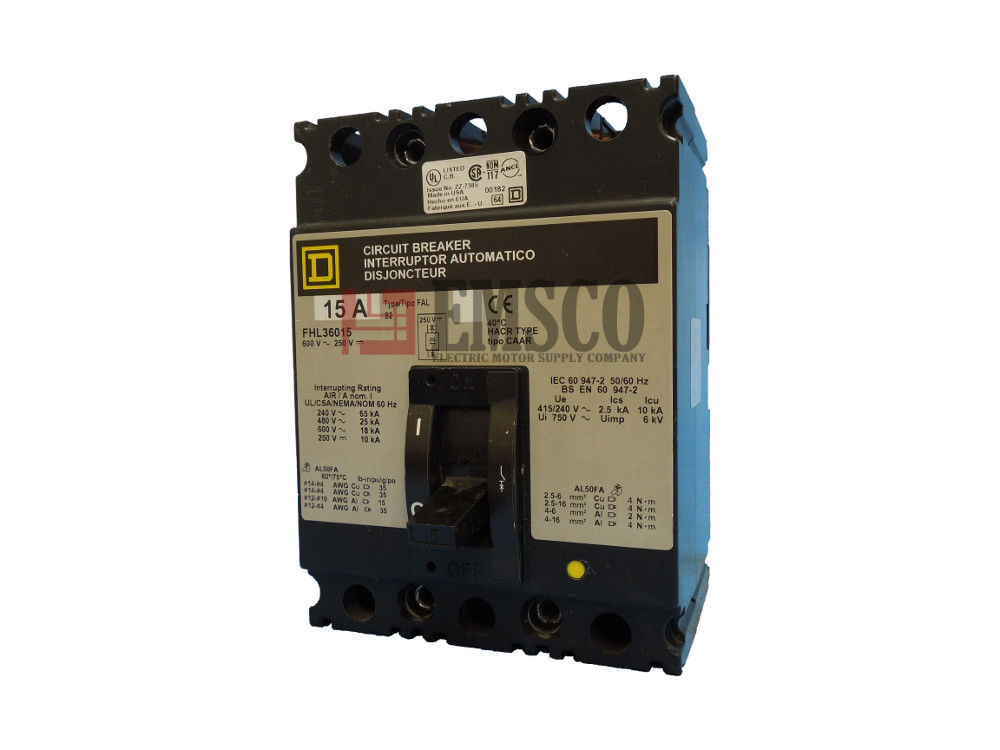
Example of an MCCB nameplate label showing amperage, voltage, and model number
Example: the breaker label is where you’ll find the model/catalog number, voltage, and amp rating.

2) Match true compatibility (not just amps)

Two breakers can share the same amp rating and still be wrong for the application. For a safe, fit-for-purpose replacement, confirm these high-impact items:

  • Voltage class and interrupt rating (AIC/kAIC)
  • Frame/series (especially on legacy gear)
  • Trip unit type and settings compatibility
  • Mounting style and terminal/lug configuration
  • Accessories (shunt trip, aux contacts, alarm switch, etc.) if your system requires them

Best practice: When in doubt, have a qualified electrician/engineer verify compatibility with your panelboard/switchboard and application requirements.

3) Consider tested/refurbished MCCBs when new is expensive or unavailable

For discontinued or hard-to-find MCCBs, used and tested inventory can be a practical solution—often faster and more cost-effective than chasing new old stock. 

Why many facilities choose tested/refurbished

  • Lower total cost versus new replacements
  • Shorter lead times when the exact model is obsolete
  • Confidence when parts are inspected/tested and backed by a warranty

If you’re sourcing for critical uptime, ask your supplier what testing/inspection is performed and what documentation is available.

4) Lead time matters: prioritize “in-stock and ready” inventory

Downtime is expensive. Partnering with a supplier that maintains a large, organized breaker inventory can dramatically reduce delays.

EMSCO’s Minneapolis facility includes a 250,000-square-foot warehouse with a large selection of tested MCCBs ready to ship, helping contractors and facilities teams get replacements faster.
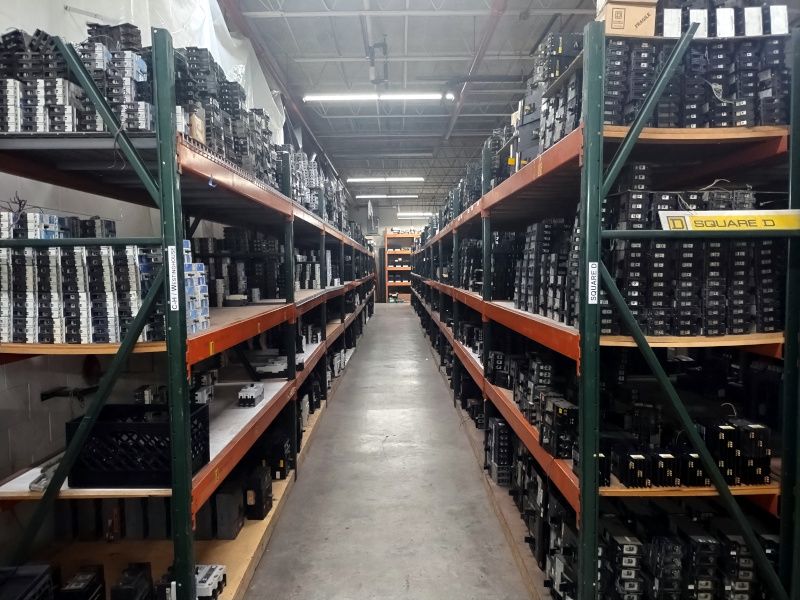
Warehouse aisle with molded case circuit breaker inventory on shelves
In-stock inventory helps shorten lead times and reduce downtime.

5) Verify quality controls, standards, and warranty

Replacement MCCBs must fit correctly and perform safely. Ask about inspection/testing practices and warranty coverage. Suppliers referencing recognized standards (such as PEARL) are signaling an emphasis on process and quality.

Quick buyer checklist:
  • What testing is performed (electrical + mechanical)?
  • Is the unit cleaned/refurbished or simply “pulled and shipped”?
  • Is a warranty included?
  • Can you provide photos and/or test documentation?
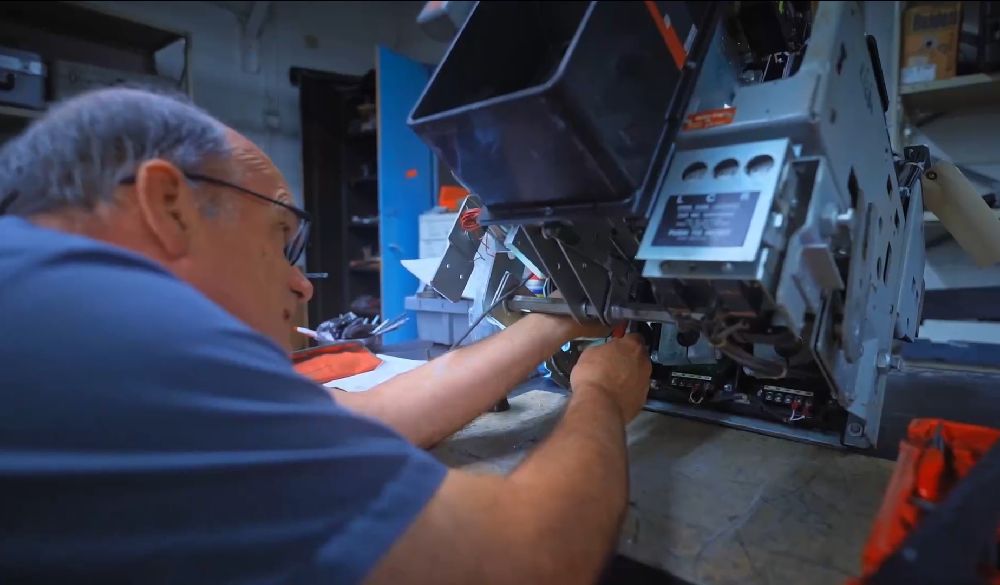
Technician inspecting and working on a circuit breaker
Ask what inspection/testing is completed before shipment.

Common mistakes to avoid

  • Ordering by amp rating only (ignoring frame/series, terminals, or mounting)
  • Skipping interrupt rating (AIC/kAIC) verification
  • Not confirming required accessories (shunt trip, aux contacts, etc.)
  • Assuming “close enough” is acceptable on legacy gear

FAQ

What info do I need to match an MCCB replacement?

At minimum: manufacturer, model/catalog number, voltage, amps, poles, trip type, interrupt rating (AIC/kAIC), and mounting/terminal configuration.

Can I replace an MCCB with a different brand or model?

Sometimes—but it must be a verified equivalent that matches the electrical ratings, mounting, and the equipment’s requirements. When in doubt, have a qualified professional confirm compatibility.

Are refurbished/used MCCBs safe?

They can be, when sourced from a reputable supplier that inspects/tests units and backs them with a warranty. Always ask what testing is performed and what documentation is available.

What if I can’t find the model number?

Send clear photos of the breaker label and how it mounts/installs. That often provides enough information for a knowledgeable supplier to identify the correct replacement or equivalent.

Next step

Browse EMSCO’s inventory of molded & insulated case circuit breakers, or contact our team with your breaker photos/specs to get a fast match.
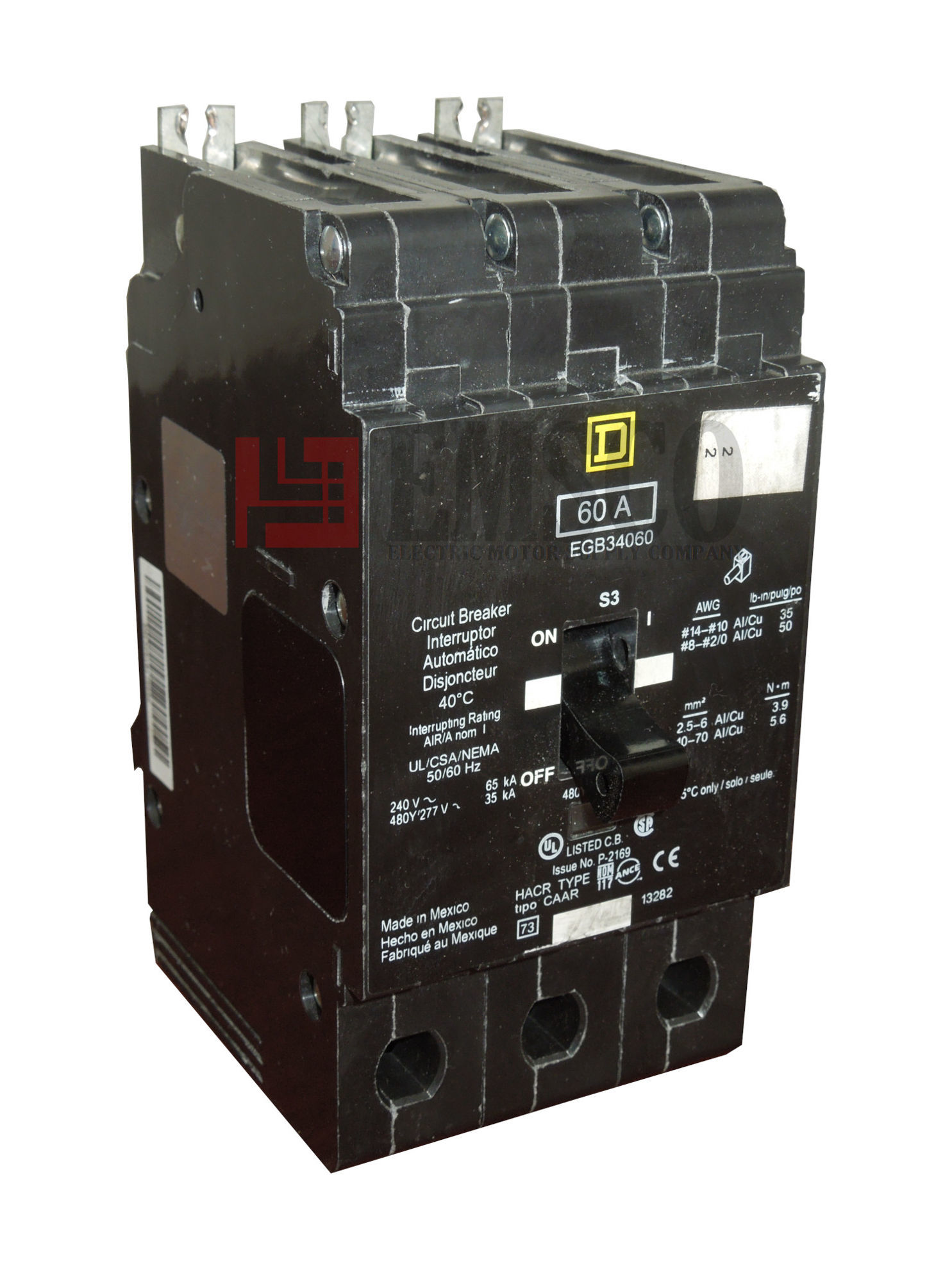
Browse Molded Case Circuit Breakers

AC Pro / AC Pro II Trip Units

You're probably aware that EMSCO is a top provider of used, reconditioned, and surplus industrial electrical equipment. However, you might not know that beyond just being the largest supplier, we also can tailor our products to your exact needs. Let's discuss one aspect of this customization: trip units, specifically the AC Pro and AC Pro II trip units.

We integrate the AC Pro / Pro II trip unit into various brands of molded case circuit breakers, covering major names like GE, Square D, Eaton, Cutler-Hammer/Westinghouse, Siemens, and more. These trip units can be customized to match your requirements regarding amperage, voltage, and function (such as LSIG). An added perk of using AC Pro and AC Pro II trip units is that they enable us to add ground fault protection to many breakers that were originally not manufactured with this capability.

For you, the customer, this means added assurance that your breaker has undergone comprehensive testing with a new trip unit installed. Our efficient turnaround time ensures that installation and testing can be completed in just a few days.

The AC Pro and AC Pro II trip units are compatible with the following brands and styles:

  • GE, including Wave Pro, Power Break, and Power Break II breakers
  • Square D, including Master Pact, NX, SED/SEF breakers
  • Eaton Cutler-Hammer/ Westinghouse, including Magnum DS, PC, SPCB SCB, SPB breakers
  • Siemens, including SB, WL breakers

If you need a molded case circuit breaker or are considering adding a trip unit, feel free to reach out to our sales team at 1-800-328-1842! We're available Monday through Friday from 8 AM to 5 PM Central Time.

Fuses vs. Circuit Breakers: Understanding the Key Differences in Industrial Power Distribution

In any industrial power distribution system, safety and reliability are of paramount importance. To protect electrical circuits and equipment from potential hazards such as overcurrents and short circuits, engineers and electricians often employ protective devices like fuses and circuit breakers. These devices play a crucial role in safeguarding the entire system, but they differ in design, operation, and response to electrical faults. In this blog post, we will explore the key differences between fuses and circuit breakers in industrial power distribution.

  1. Function and Operation:

    • Fuses: A fuse is a one-time, non-resettable protective device that contains a metal strip or wire designed to melt when exposed to excessive current flow. When the current exceeds the fuse's rated value, the metal inside the fuse will melt, opening the circuit and stopping the current flow. Fuses are inexpensive and simple in design, making them suitable for basic protection.
    • Circuit Breakers: Circuit breakers, on the other hand, are resettable protective devices designed to interrupt the current flow upon detecting an overcurrent or short circuit. They consist of an electromechanical switch that opens the circuit when an abnormal condition occurs. After tripping, circuit breakers can be manually or automatically reset, restoring power to the circuit once the fault is resolved.
  2. Response Time:

    • Fuses: Fuses generally have a faster response time compared to circuit breakers. When subjected to overcurrent conditions, fuses blow quickly, thereby interrupting the current flow almost instantaneously. This swift response is essential in protecting sensitive equipment from damage due to high currents.
    • Circuit Breakers: Circuit breakers may have a slightly slower response time compared to fuses. The tripping mechanism needs a brief moment to detect the fault and open the circuit. While the delay is minimal, it can be a critical factor when dealing with highly sensitive electronic devices.
  3. Protection Accuracy:

    • Fuses: Fuses provide good protection against overcurrent conditions, but their accuracy depends on the type and rating of the fuse. They might not always respond precisely to minor overloads or fluctuating currents, which can lead to undesired nuisance trips or insufficient protection in some cases.
    • Circuit Breakers: Circuit breakers offer more precise protection since they can be equipped with various types of trip units that allow customization of the tripping characteristics. This adaptability ensures that circuit breakers respond accurately to specific overcurrent levels, providing better protection for critical equipment.
  4. Maintenance and Resetting:

    • Fuses: Once a fuse blows due to a fault, it must be replaced manually. This process can be time-consuming, especially in large industrial setups with numerous fuses. Additionally, identifying the faulty fuse might require careful inspection, further adding to the downtime.
    • Circuit Breakers: Circuit breakers have the advantage of being resettable, which significantly reduces downtime in the event of a fault. After isolating the faulty circuit, the breaker can be reset with a simple switch, restoring power to the system almost immediately.
  5. Cost and Longevity:

    • Fuses: Fuses are generally more cost-effective than circuit breakers, making them a popular choice for lower current applications. However, their one-time use means they must be replaced after each fault, resulting in higher long-term maintenance costs.
    • Circuit Breakers: While circuit breakers may have a higher initial cost, their reusability and longer lifespan offset this drawback. They are an economically viable option for higher current applications and provide better value in the long run.

In conclusion, both fuses and circuit breakers play critical roles in safeguarding industrial power distribution systems. Fuses offer fast response times and cost-effectiveness, while circuit breakers provide more precise protection and are easier to maintain. The choice between these protective devices ultimately depends on the specific requirements of the industrial application and the level of protection needed for the equipment and personnel involved.

Industrial Power Protection: Unveiling Molded Case Circuit Breakers (MCCBs)

In the realm of industrial power distribution, ensuring safety, reliability, and efficiency is of utmost importance. To protect electrical circuits and equipment from overcurrents and short circuits, engineers often turn to molded case circuit breakers (MCCBs). These robust and versatile devices play a crucial role in safeguarding industrial power systems, ensuring smooth operations and preventing potential hazards. In this blog post, we will delve into the features, benefits, and applications of molded case circuit breakers in industrial settings.

The Anatomy of Molded Case Circuit Breakers:
Molded case circuit breakers are named after their housing, which is typically made from molded insulating materials such as plastic or fiberglass. Inside the casing, these breakers comprise essential components like the trip unit, operating mechanism, and current-carrying contacts. The trip unit is responsible for detecting overcurrent conditions and tripping the breaker when necessary, while the operating mechanism ensures the mechanical action of opening and closing the circuit.

Wide Range of Current Ratings:
MCCBs are available in a wide range of current ratings, making them suitable for diverse industrial applications. They can handle currents ranging from a few amps to thousands of amps, allowing engineers to choose the appropriate breaker based on the specific requirements of their power distribution system.

Accurate and Reliable Protection:
One of the primary functions of an MCCB is to provide precise and reliable protection against overcurrent conditions. The trip units in MCCBs are designed to respond swiftly to abnormal current levels, effectively isolating the faulty circuit and preventing potential damage to equipment. With adjustable tripping settings, engineers can customize the MCCBs to suit the unique characteristics of their industrial power systems.

Thermal and Magnetic Protection:
MCCBs offer both thermal and magnetic protection, catering to different types of faults. The thermal trip element responds to overloads caused by long-duration, low-level overcurrents, while the magnetic trip element reacts to short-circuit currents. This dual protection mechanism ensures comprehensive safety coverage in industrial power settings.

Selectivity and Coordination: 
Industrial power distribution systems often have multiple levels of circuit breakers, from the main distribution board down to individual branch circuits. MCCBs provide the advantage of selectivity and coordination, which means that when a fault occurs, only the nearest MCCB to the fault will trip, leaving other downstream breakers unaffected. This feature minimizes downtime and optimizes system performance during fault scenarios.

Ease of Maintenance and Retrofitting:
MCCBs are designed for easy maintenance and replacement. With proper periodic inspection and testing, their lifespan can be extended, contributing to cost savings. Additionally, they are compatible with various accessories and digital communication modules, enabling seamless integration into modern industrial automation systems.

Versatility and Applications:
Molded case circuit breakers find applications across various industrial sectors, including manufacturing plants, data centers, commercial buildings, oil and gas facilities, and mining operations. They provide vital protection for motors, transformers, generators, distribution boards, and other critical electrical components.

In conclusion, molded case circuit breakers are indispensable assets in industrial power settings. Their accurate protection, ease of maintenance, and compatibility with modern automation technologies make them a reliable choice for ensuring the safety and efficiency of power distribution systems. By understanding the benefits and applications of MCCBs, engineers can make informed decisions to secure their industrial power infrastructure effectively.


Picture of EGB34125 Square D Circuit Breaker


Find the Molded Case Breaker you need here!

Molded Case Circuit Breaker Testing

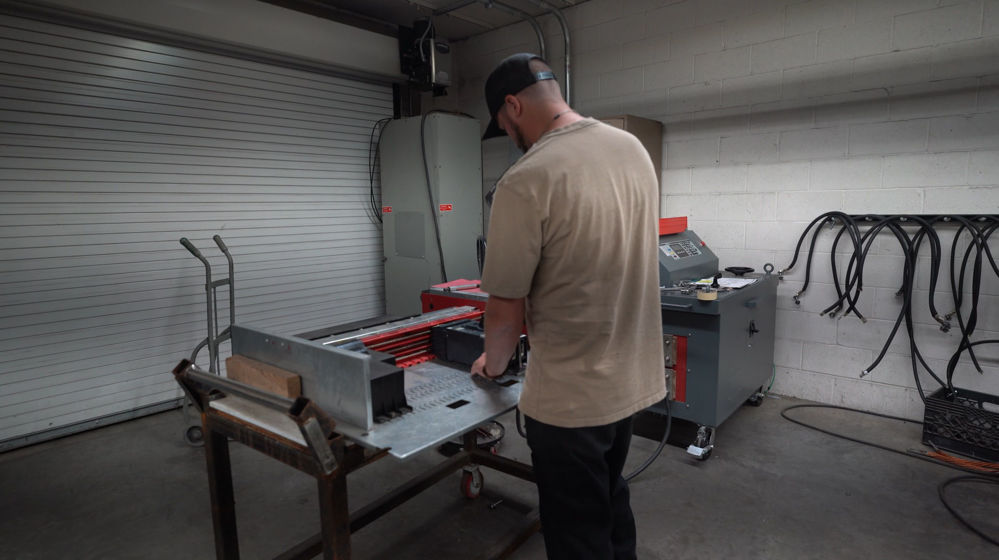
At EMSCO, we offer a full range of services for testing and purchasing molded case circuit breakers. Our experienced team utilizes two state-of-the-art circuit breaker test sets—the Megger DDA-6000 Universal Circuit Breaker Test Set and the Phenix Model HC40C High Current Test Set—to thoroughly assess your circuit breakers. Whether you want to buy a breaker from us or simply require testing, we provide detailed test reports for all units.

We take pride in our efficiency and fast turnaround times. Most breakers can be tested and shipped on the same day, and we maintain a diverse inventory of breakers ranging from 15 to 5000 amps.

For circuit breaker testing or if you're in the market for a new one, EMSCO is your go-to destination. Reach out today to speak with one of our knowledgeable sales representatives about your testing needs.


Shop Molded & Insulated Case Circuit Breakers