

 Browse Store
 An Introduction to Bus Plugs
Tuesday, May 6, 2014
What Is a Bus Plug? A Practical Guide to Busway Tap-Off Power
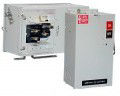
In large industrial facilities, running new conduit and hardwiring every time equipment moves can be slow, costly, and disruptive. That’s why many plants use bus duct (busway) with bus plugs—a faster, more flexible way to distribute power across open floor plans.
A bus plug (also called a tap-off unit or plug-in unit) locks into a busway run to safely “tap” power and feed equipment below. Because bus plugs are designed for quick installation and removal, they’re a smart solution for equipment moves, line changes, and facility expansions.
Quick definition: A bus plug (often called a tap-off unit or plug-in unit) is a device that locks into a busway run and safely “taps” power to feed equipment below. Bus plugs are commonly available in breaker or fusible styles and must match the manufacturer + series of the busway they connect to.
Table of Contents
- Busway (Bus Duct) Basics
- What a Bus Plug Does
- Common Bus Plug Types
- Why Facilities Use Bus Plugs
- How to Select the Right Bus Plug
- When to Service or Replace a Bus Plug
- Bus Plugs & Busway at EMSCO
- FAQ
Busway (Bus Duct) Basics
In most homes and many commercial buildings, power is distributed by wiring inside walls and ceilings. Industrial facilities are different: wide-open spaces, changing production lines, and ongoing expansions make traditional hardwiring less practical.
Busway (also called bus duct) is a metal enclosure that contains conductors for distributing electricity. It’s installed overhead or underfloor in connected sections to create a run that fits your layout. The run includes plug-in points where bus plugs can connect to deliver power where it’s needed.
What a Bus Plug Does
A bus plug attaches to a busway run and provides a protected point to feed a machine, process, or downstream panel. Inside the unit, contacts engage the busway conductors, and the bus plug routes that power out through lugs/cable connections—typically with built-in protection.
Most bus plugs are designed for fast installation and removal, making them ideal when equipment moves, lines change, or new loads are added.
Common Bus Plug Types
1) Breaker bus plugs
Breaker-style bus plugs include a circuit breaker inside the enclosure. This makes resets and servicing straightforward, and they’re common in many industrial layouts.
2) Fusible bus plugs
Fusible bus plugs use fuses for overcurrent protection. Facilities often choose fuses for specific protection strategies, coordination needs, or legacy systems.
Other fitment details that matter
- Voltage (example ranges you’ll commonly see include 120/240V, 240V, 480V, and 600V)
- Amperage (low-amp through high-amp options, depending on busway series and application)
- Wire configuration (3-wire vs. 4-wire) and whether a ground is included
- Enclosure/orientation (how the unit mounts and where the cable exits)
- Manufacturer + series compatibility (bus plugs are not universal)
Why Facilities Use Bus Plugs
- Faster changes: Add or move drops without reworking large conduit runs.
- Scalable expansions: Ideal for plant additions, new lines, equipment overhauls, or reconfigurations.
- Cleaner installs: Power distribution can look more organized in open areas.
- Serviceability: Well-matched plug-in units make it easier to isolate and maintain loads.
How to Select the Right Bus Plug (Fitment Checklist)
If you want a quote or need help identifying a replacement, here’s what we recommend gathering first:
- Busway manufacturer + series (example series can include I-Line, Sentron, Spectra, Pow-R-Way, Armor-Clad, XL-U, and more)
- Busway rating details: voltage class, amperage, and wire configuration (3-wire/4-wire, neutral, ground)
- Bus plug style: breaker vs. fusible
- Amp rating needed for the load (and any coordination requirements)
- Physical details: mounting position, cable exit direction, and enclosure requirements
- Photos of the nameplates (busway label + bus plug label) and the plug-in opening if possible
Tip: The fastest way to get the right match is to send us clear photos of the busway and any existing plug/unit labels. If you’re unsure, our team can help identify what you have and what will fit.
When to Service or Replace a Bus Plug
Bus plugs operate in demanding environments. Consider inspection or replacement if you notice:
- Signs of overheating (discoloration, odor, brittle insulation)
- Loose hardware or damaged stab contacts
- Cracked housings, broken handles, or missing interlock components
- Corrosion or contamination that could affect connections
- Nuisance trips or inconsistent performance
Always follow facility safety procedures and use qualified electrical professionals for installation and service.
Bus Plugs & Busway at EMSCO
If you’re sourcing a replacement bus plug—or trying to match a legacy/obsolete system—EMSCO stocks a large selection of new, used, and reconditioned bus plugs across major manufacturers and many vintages.
- Shop Bus Plugs
- Shop Bus Duct (Busway)
- Shop Tap Boxes & Accessories
- Contact EMSCO for identification help or a quote
Need help fast? Call our team at 1-800-328-1842 (24-hour emergency line).
FAQ
Are bus plugs universal?
No. Bus plugs must match the manufacturer and series of the busway they’re designed for, along with the correct electrical ratings.
What’s the difference between a bus plug and a tap box?
A bus plug is typically a plug-in tap-off unit used along a busway run to feed equipment. A tap box is commonly used as an end/center feed or connection point in a busway system. Both must match the busway series and application.
Breaker vs. fusible bus plug: which is better?
It depends on your system design, coordination strategy, and what the busway supports. Breaker units are convenient to reset and service; fusible units are often chosen for specific protection requirements or legacy setups.
What does 3-wire vs. 4-wire mean?
In many systems, 3-wire refers to three-phase conductors (no neutral), while 4-wire includes a neutral. Always verify your busway labeling and facility requirements.
What information should I send for a quick match?
Photos of the busway nameplate, the plug/unit label (if available), and the plug-in opening—plus your voltage, amp, and wire/ground requirements—usually gets you to the right match fastest.
Browse our selection of bus plugs
Updated 2026